
What Happens After You Quit Smoking: A Chart Shows the Changes
"What Happens After You Quit Smoking: A Comprehensive Chart of Changes"
Introduction: Quitting smoking is a significant decision that can lead to numerous health benefits. However, understanding the changes that occur after quitting can be both motivating and reassuring. This article provides a detailed chart showcasing the changes that take place in your body and overall well-being within days, weeks, months, and years after quitting smoking.
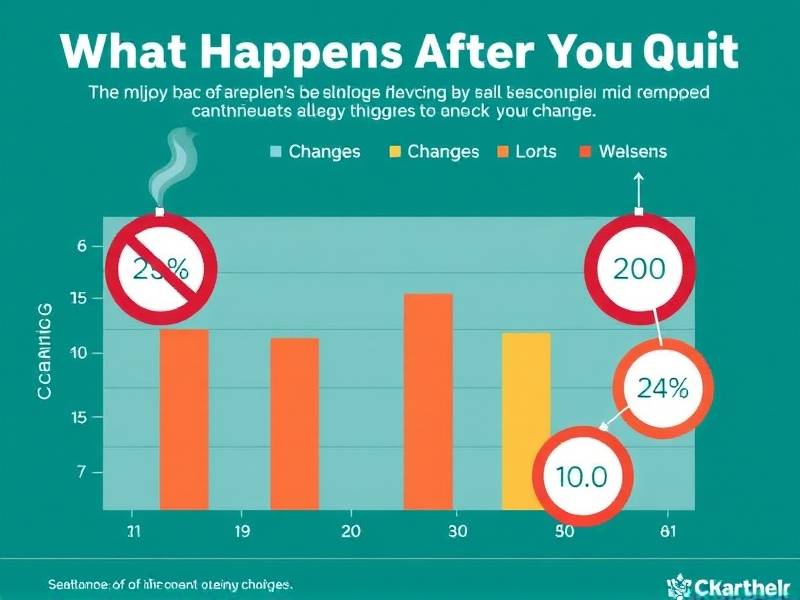
I. Immediate Changes (within 48 hours)
-
Improved Oxygen Supply: Quitting smoking allows your blood to carry more oxygen, leading to improved energy levels and better overall health.
-
Reduced Carbon Monoxide Levels: Carbon monoxide levels in your blood drop quickly after quitting smoking, improving the oxygen supply to your heart and brain.
-
Enhanced Taste and Smell: Your sense of taste and smell begins to return as the cilia in your nose recover from damage caused by smoke exposure.
II. Short-Term Changes (within 2-12 weeks)
-
Decreased Cigarette Cravings: Cravings for cigarettes typically decrease within the first two weeks of quitting.
-
Improved Lung Function: Your lung function starts to improve as your respiratory system clears out mucus and debris accumulated from smoking.
-
Increased Energy Levels: As carbon monoxide levels decrease, you may notice an increase in energy and vitality.
III. Medium-Term Changes (within 1-9 months)
-
Reduced Risk of Heart Disease: The risk of heart disease begins to decline as your cardiovascular system strengthens.
-
Improved Immune System: Your immune system becomes stronger, making it easier for you to fight off infections.
-
Improved Skin Texture: Your skin may appear smoother as blood flow improves and the appearance of wrinkles decreases.
IV. Long-Term Changes (within 5-10 years)
-
Decreased Risk of Cancer: The risk of developing various types of cancer decreases significantly after quitting smoking for several years.
-
Lower Risk of Chronic Obstructive Pulmonary Disease (COPD): The risk of developing COPD decreases as lung function continues to improve.
-
Improved Overall Health: Over time, former smokers experience improved quality of life with fewer health issues compared to those who continue smoking.
Conclusion:
Quitting smoking is a transformative decision with immediate and long-lasting benefits for your health and well-being. By understanding the changes that occur after quitting, you can stay motivated on your journey towards a smoke-free life. Remember that each person's experience may vary, but taking steps towards quitting can lead to a healthier future for yourself and those around you.