
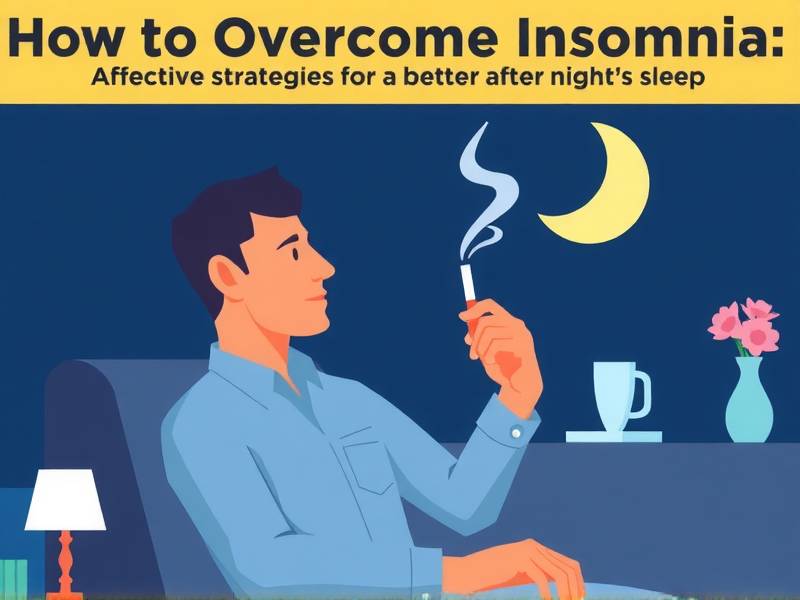
How to Overcome Insomnia After Quitting Smoking: Effective Strategies for a Better Night's Sleep
How to Overcome Insomnia After Quitting Smoking: Effective Strategies for a Better Night's Sleep
Introduction: Quitting smoking is a significant step towards a healthier lifestyle, but it often comes with challenges. One common issue faced by many smokers after quitting is insomnia. This article will explore effective strategies to help you overcome insomnia after quitting smoking and enjoy a more restful night's sleep.
I. Understanding the Link Between Smoking and Insomnia

Insomnia can be caused by various factors, including stress, anxiety, and lifestyle changes. However, smoking is a well-known disruptor of sleep patterns. Nicotine is a stimulant that can keep you awake and make it difficult to fall asleep or stay asleep throughout the night.
II. Strategies to Overcome Insomnia After Quitting Smoking
-
Establish a Sleep Schedule Creating a consistent sleep schedule can help regulate your body's internal clock and improve sleep quality. Aim to go to bed and wake up at the same time every day, even on weekends.
-
Create a Relaxing Bedtime Routine A calming bedtime routine can signal your body that it's time to wind down and prepare for sleep. Consider activities such as reading, taking a warm bath, or practicing relaxation techniques like deep breathing or meditation.
-
Avoid Stimulants Before Bed Stay away from caffeine, nicotine, and other stimulants several hours before bedtime as they can interfere with your ability to fall asleep.
-
Create an Optimal Sleep Environment Make sure your bedroom is conducive to sleep by keeping it dark, quiet, and at a comfortable temperature. Consider using blackout curtains or earplugs if needed.
-
Limit Exposure to Electronic Devices The blue light emitted by electronic devices such as smartphones, tablets, and computers can interfere with your ability to fall asleep. Try to avoid screens for at least an hour before bedtime.
-
Exercise Regularly Regular physical activity during the day can help improve sleep quality at night. However, avoid vigorous exercise close to bedtime as it may keep you awake longer.
-
Manage Stress and Anxiety Stress and anxiety are common causes of insomnia after quitting smoking. Consider stress-reduction techniques such as yoga, journaling, or talking with friends or family members about your concerns.
-
Seek Professional Help if Needed If you continue to experience difficulty sleeping despite trying these strategies, consult with a healthcare professional for guidance on managing insomnia after quitting smoking.
Conclusion: Overcoming insomnia after quitting smoking may take some time and effort, but implementing these effective strategies can help you achieve better sleep quality and improve your overall well-being. Remember that patience is key during this transition period – give yourself time to adjust and make the necessary changes for long-term success in both quitting smoking and improving your sleep habits.