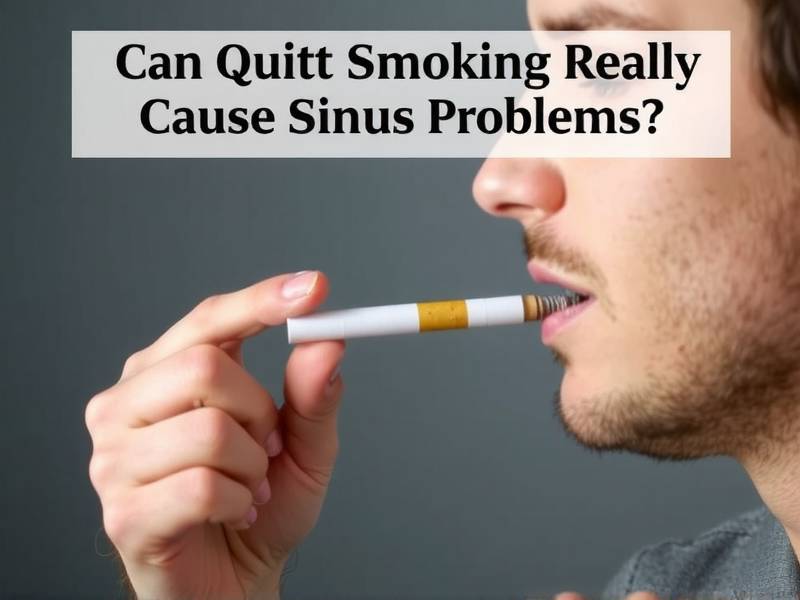
Can Quitting Smoking Really Cause Sinus Problems?
Can Quitting Smoking Really Cause Sinus Problems? A Comprehensive Guide
Introduction: Quitting smoking is a significant decision that many people make to improve their health and well-being. However, some individuals may experience sinus problems after quitting. In this article, we will explore the relationship between quitting smoking and sinus issues, providing you with valuable insights to make an informed decision.
Section 1: Understanding Sinus Problems Sinus problems, also known as sinusitis, occur when the sinuses become inflamed or infected. The sinuses are air-filled spaces in the skull that produce mucus to help protect the nose and throat from irritants. When these spaces become blocked or filled with fluid, it can lead to various symptoms such as facial pain, pressure, congestion, and headaches.

Section 2: The Impact of Smoking on Sinus Health Smoking has been linked to several respiratory conditions, including chronic sinusitis. The chemicals present in cigarettes can irritate the mucous membranes of the sinuses, leading to inflammation and an increased risk of infection.
Section 3: Quitting Smoking and Sinus Problems It is common for individuals who quit smoking to experience a temporary increase in sinus symptoms. This is due to several factors:
- Withdrawal Symptoms: When you stop smoking, your body goes through withdrawal symptoms as it adjusts to not having nicotine. These symptoms can include congestion and runny nose.
- Mucus Production: Quitting smoking may cause an increase in mucus production as your body tries to clear out irritants that were previously present due to smoking.
- Immune System Response: Your immune system might react differently after quitting smoking, leading to a temporary increase in inflammation and sinus issues.
Section 4: Coping with Sinus Problems After Quitting Smoking If you experience sinus problems after quitting smoking, here are some tips to help alleviate symptoms:
- Stay Hydrated: Drinking plenty of fluids can help thin mucus and reduce congestion.
- Use Saline Nasal Sprays: Saline nasal sprays can help clear out mucus from the sinuses.
- Avoid Irritants: Stay away from allergens or irritants that may exacerbate your symptoms.
- Over-the-Counter Medications: Use decongestants or antihistamines if recommended by a healthcare professional.
Conclusion: While it is true that quitting smoking can cause sinus problems temporarily, it is essential to understand that these issues are usually short-lived. By taking appropriate measures and seeking medical advice if needed, you can manage these symptoms effectively while reaping the numerous health benefits of quitting smoking for good.
Remember, quitting smoking is a significant step towards improving your overall health and well-being. Don't let temporary sinus problems discourage you from making this life-changing decision!